
Technical Specifications and Architectural Breakdown
The bombardment was not a localized skirmish but a high-intensity, coordinated strike package. Intelligence reports confirm the deployment of 98 drones, primarily variants of long-range, autonomous loitering munitions, supported by a secondary wave of anti-ship missiles repurposed for land-attack roles. From an engineering perspective, these munitions utilize inertial navigation systems (INS) augmented by GLONASS-based satellite guidance, allowing for high-precision strikes even in environments saturated with electronic warfare countermeasures.
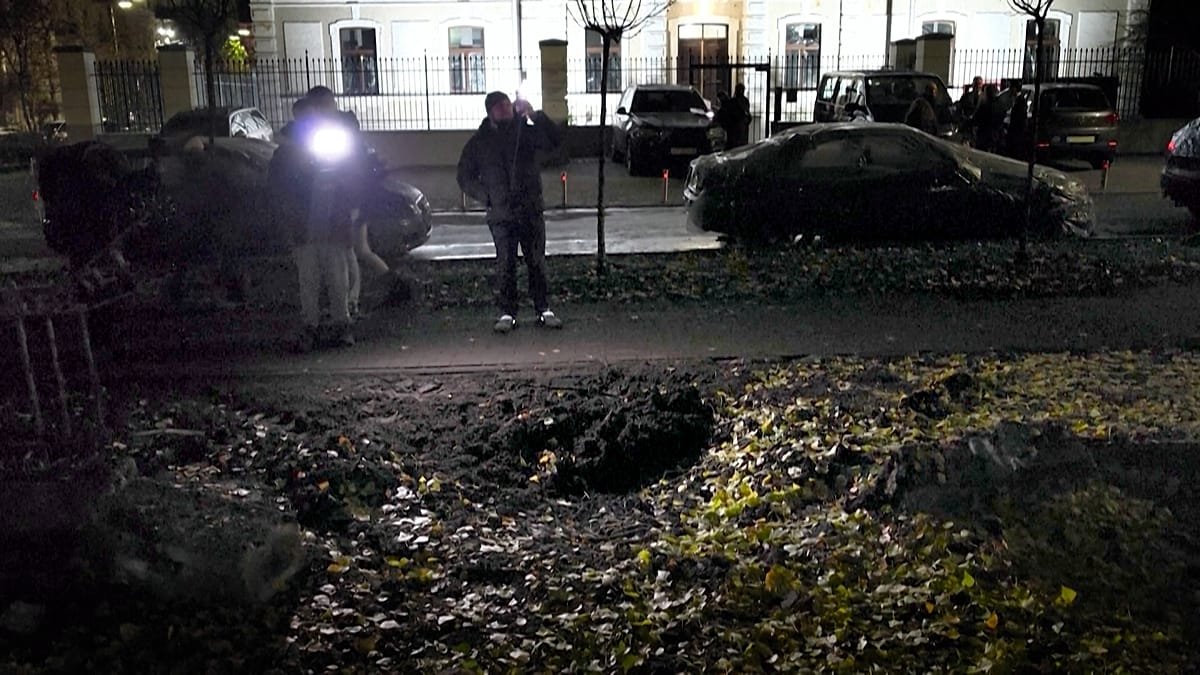
The damage sustained by the Austrian and Dutch missions provides a forensic look at the kinetic energy involved. The Austrian embassy experienced a blast wave that shattered structural glass and caused significant internal damage to office infrastructure, while the Dutch facility was struck by a projectile that penetrated the outer perimeter. The architectural vulnerability here is twofold: most historic diplomatic buildings in Kyiv were designed for security against civil unrest or localized explosives, not for the high-velocity, high-explosive payloads typical of modern cruise and anti-ship missile systems. The failure of the structural integrity in these instances highlights the limitations of traditional reinforced concrete and ballistic glazing when subjected to the sheer G-force and detonation pressure of modern tactical weaponry.
Industry Landscape and Competitive Comparison
The geopolitical climate in Kyiv has shifted from traditional security concerns to a landscape defined by rapid technological escalation. The proximity of these strikes to the recent activities of aerospace and defense firms, such as Destinus, underscores the volatile relationship between private-sector innovation and military targeting. Below is a comparison of the defensive posture and threat profiles observed during recent major aerial campaigns in the region.
| Metric | Legacy Aerial Threats (2022) | Current Multi-Vector Assaults (2026) |
|---|---|---|
| Primary Vector | Ballistic Missiles | Swarm Drones + Anti-Ship/Cruise Hybrids |
| Guidance Precision | Moderate (10-20m CEP) | High (1-3m CEP) |
| Defensive Load | Static Air Defense | Integrated EW + Kinetic Interception |
| Targeting Scope | Strategic Infrastructure | Diplomatic/Governmental Perimeter |
The shift from singular, high-value targeting to saturation-style attacks indicates a move toward overwhelming defensive grid saturation. Unlike the earlier stages of the conflict, where air defense batteries could reliably track and engage incoming threats, the current environment forces defensive systems to prioritize targets, occasionally leaving diplomatic or secondary government facilities exposed to “leakage” from the main engagement zones.
Practical Consumer & Enterprise Takeaways
For organizations operating in high-risk zones, the events in Kyiv dictate a fundamental reassessment of physical security protocols. The “hardened office” model is no longer sufficient when the threat includes anti-ship munitions capable of penetrating multiple layers of masonry. Enterprise stakeholders should consider the following:
- Geospatial Redundancy: Organizations should avoid centralizing operations in historic city centers where diplomatic and government targets are clustered, as these areas are increasingly subject to collateral damage from saturation strikes.
- Structural Hardening: Retrofitting facilities with blast-mitigation films and internal reinforced safe rooms is a baseline requirement, but it must be paired with automated early-warning systems that trigger evacuation to subterranean levels well before the arrival of the primary strike package.
- Digital Sovereignty: As physical premises become more precarious, the reliance on decentralized, cloud-based data storage and remote-work capabilities becomes a matter of operational continuity rather than just efficiency.
Frequently Asked Questions
How do anti-ship missiles differ from conventional cruise missiles in an urban environment?
Anti-ship missiles are designed to penetrate heavy ship armor and utilize high-explosive, semi-armor-piercing warheads. When used against urban infrastructure, their kinetic impact is significantly higher than standard land-attack cruise missiles, often resulting in deeper structural penetration and more extensive blast fragmentation.
Was the targeting of the embassies intentional or a result of system error?
While Ukrainian authorities have suggested the strikes were part of a coordinated effort to disrupt infrastructure, there is currently no forensic evidence to suggest the embassies were the primary intended targets. The damage is likely a result of the high-density nature of the attack, where interceptor debris or guidance deviations caused projectiles to veer into nearby diplomatic zones.
What is the role of electronic warfare in these incidents?
Electronic warfare is the primary defense against swarm drone attacks. When EW systems attempt to jam the navigation signals of incoming drones, the munitions may lose their precise targeting, leading to erratic flight paths. This “spoofing” often results in weapons impacting areas far from their intended military targets, including civilian and diplomatic sectors.
The Bottom Line
The damage sustained by the Austrian and Dutch embassies is a sobering indicator of the current state of conflict, where the boundary between strategic military targets and international diplomatic presence has become dangerously porous. The technical proficiency of the November 19 strikes demonstrates that even the most secure urban environments are subject to the reach of modern aerial warfare. For the international community, the lesson is clear: in an era of saturation-based military tactics, the traditional protections afforded by diplomatic status are increasingly vulnerable to the realities of high-velocity, autonomous, and multi-vector weaponry. Future security planning must account for a landscape where the distinction between a military target and a civilian location is frequently erased by the mechanical limitations of the projectiles themselves.