
Technical Specifications and Architectural Breakdown
Anthropic distinguishes itself from its contemporaries through a specialized focus on Constitutional AI, a training protocol designed to align model outputs with a predefined set of ethical principles rather than relying solely on human feedback loops. At the core of the company’s infrastructure is the Claude series, which utilizes a massive transformer architecture optimized for high-context windows and reasoning capabilities. Unlike models that prioritize raw parameter counts, Anthropic has focused on the efficiency of the inference stack, employing a proprietary distributed computing framework that minimizes latency during complex multi-step reasoning tasks.
The architectural backbone relies on a highly optimized deployment of specialized GPU clusters, managed through a custom orchestration layer that allows for dynamic resource allocation. This is critical, as the “inference tax”—the cost of running a query—remains the primary hurdle for AI profitability. By refining the model’s weight quantization and utilizing advanced kernel fusion techniques, Anthropic has managed to lower the compute cost per token. However, the sheer scale of the hardware footprint required to maintain state-of-the-art performance remains a significant operational burden. The company’s focus on “Helpful, Harmless, and Honest” (HHH) benchmarks has created a unique technical moat, as the alignment process is integrated into the pre-training phase, rather than applied as a secondary, performance-degrading layer.
Industry Landscape and Competitive Comparison
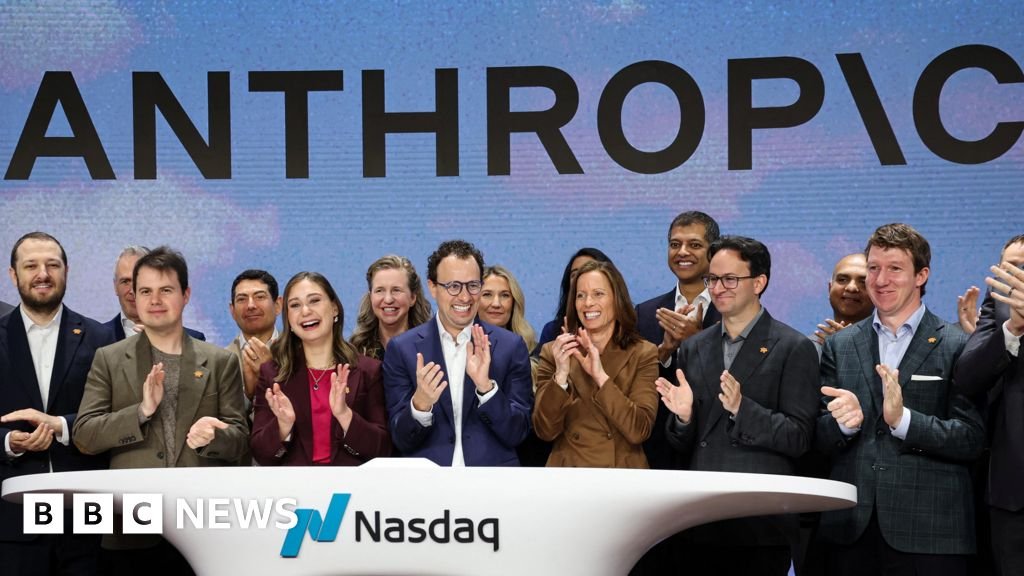
The current market landscape is saturated with companies vying for dominance in the large language model space. To understand the impact of the Anthropic public listing, one must look at how it compares to established incumbents. Unlike hardware-focused companies, Anthropic operates as a software-first entity, relying on third-party cloud infrastructure rather than owning its own data centers. This creates a unique risk-reward profile: the company benefits from the rapid advancement of silicon, yet remains tethered to the pricing structures of cloud providers like Amazon and Google.
| Feature | Anthropic (Claude 3.5) | OpenAI (GPT-4o) | Google (Gemini 1.5 Pro) |
|---|---|---|---|
| Primary Focus | Constitutional AI / Safety | Multimodal Integration | Ecosystem Synergy |
| Context Window | 200k+ Tokens | 128k Tokens | 1M+ Tokens |
| Inference Cost | Medium-High | Medium | Variable (Deep Integration) |
| Market Position | Independent / Enterprise | Microsoft-Backed | Alphabet Subsidiary |
The competitive environment is increasingly defined by the ability to offer specialized enterprise solutions. While competitors lean into consumer-facing creative tools, Anthropic has carved out a niche in high-stakes industries such as legal analysis, medical research, and financial modeling, where the predictability of the model is as important as its raw intelligence.
Practical Consumer & Enterprise Takeaways
For enterprise buyers, the Anthropic public listing introduces a new variable into the procurement process: long-term vendor viability. Historically, AI startups have been acquisition targets, leaving enterprise customers with the risk of service degradation or platform migration. With Anthropic now publicly traded, there is a higher degree of transparency regarding financial health and operational runway. Organizations considering a long-term integration of Claude into their workflows should prioritize the “Total Cost of Ownership” (TCO) model, which includes not just API usage fees, but the cost of building internal guardrails and data privacy compliance structures.
For investors, the volatility following the listing suggests that the market is still struggling to value “intelligence as a service.” The divergence between Anthropic’s performance and the broader tech sector indicates that capital is shifting away from general-purpose tech conglomerates and toward specialized firms that can demonstrate a clear path to margin expansion. Buyers should remain cautious, viewing AI as a capital-intensive utility rather than a high-margin software product until the industry achieves a standardized unit of economic efficiency.
Frequently Asked Questions
Does the public listing change how Anthropic handles user data privacy?
No. The transition to a public company mandates stricter regulatory reporting and financial transparency, but it does not alter the underlying data processing agreements or the constitutional alignment protocols that govern how Claude interacts with user information.
How does the $1.76 trillion valuation compare to historical tech IPOs?
The valuation places Anthropic in the highest tier of market capitalization, rivaling established tech giants. It is important to note that this valuation is based on forward-looking revenue projections, assuming a rapid adoption of generative AI across the global enterprise sector.
What is the biggest risk for investors following this listing?
The primary risk remains the “compute cliff.” If the cost of training and inference does not decrease at a rate that outpaces the demand for more complex models, the company may face significant margin compression, regardless of its technological superiority.
The Bottom Line
The Anthropic public listing is a watershed moment that forces the technology sector to confront the financial gravity of generative AI. While the company’s technical architecture and commitment to constitutional safety provide a distinct competitive advantage, the market remains skeptical of the massive infrastructure costs required to sustain such performance. For the industry at large, this listing marks the end of the “growth at all costs” era and the beginning of a more disciplined, performance-oriented phase. Investors and enterprise users alike should view Anthropic not as a guaranteed success, but as the primary bellwether for whether artificial intelligence can evolve from a research-heavy capital sink into a sustainable, profitable pillar of the modern economy.