
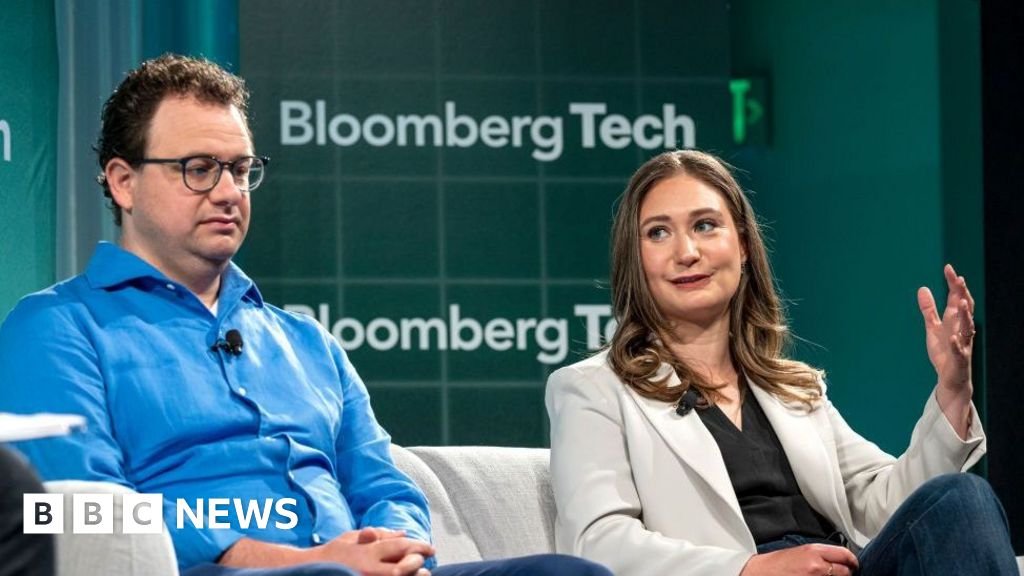
Anthropic founders prepare for historic market debut
The Anthropic founders are poised to become multi-billionaires as their AI enterprise prepares to list on the US stock exchange. In just five years, the company has transformed from a niche research start-up into a global entity valued at over a trillion dollars, driven by the rapid adoption of its flagship platform, Claude.
The seven individuals who departed OpenAI in 2021 to strike out on their own are witnessing their equity stakes soar. With shares priced at $83 each, the financial impact for the core leadership team is substantial, with each holding potentially worth upwards of $19.3 billion. This transition marks a significant shift in the competitive landscape of generative artificial intelligence.
Engineering the future with Anthropic founders
At the center of this growth is CEO Dario Amodei. A former physicist who pivoted to biology following personal tragedy, Amodei has been the driving force behind the company’s internal culture. His leadership style, described by colleagues as deeply ambitious, is rooted in a desire to prioritize safety in machine learning. Alongside him, the Anthropic founders have built a robust infrastructure designed to compete with established giants like Google and OpenAI.
The engineering side is spearheaded by figures like Tom Brown, the company’s chief compute officer. Brown, who previously led GPT-3 engineering at OpenAI, brings a wealth of experience in scaling large language models. His focus on data center efficiency and computational power has been instrumental in keeping Claude competitive. The Anthropic founders continue to emphasize that their architectural approach is distinct, focusing on constitutional AI to govern model behavior.
Anthropic Founders: Competitive landscape and market comparison
The market for large language models has become increasingly crowded. While the Anthropic founders focus on safety-first deployment, rivals like OpenAI and Google DeepMind maintain different priorities regarding speed and product integration. The following table highlights the comparative focus of these industry leaders.
| Company | Primary Focus | Key Advantage |
|---|---|---|
| Anthropic | Constitutional AI/Safety | Model reliability |
| OpenAI | Rapid Innovation | First-mover advantage |
| Google DeepMind | Integration | Global ecosystem |
Unlike competitors that prioritize feature-dense releases, the Anthropic founders have opted for a more controlled rollout. This strategy has resonated with enterprise clients who demand predictability and reduced hallucination rates in their AI workflows. As the business moves toward a public listing, the market will soon see if this cautious approach yields long-term financial sustainability.
Practical implications for users and investors
For the average user, this public listing signifies that the Anthropic founders are moving into a new phase of commercialization. While the technology behind Claude remains accessible, the pressure to deliver quarterly results to public shareholders may influence the pace of future updates. Investors are watching closely to see if the company can maintain its research-heavy focus while meeting Wall Street expectations.
Analysts suggest that the company’s valuation reflects not just current revenue, but the immense potential for AI in the enterprise sector. The Anthropic founders have successfully positioned their platform as a premium tool for developers and corporations. For those looking to integrate AI into their own workflows, the stability of the company is now a matter of public record, providing a level of transparency that was previously unavailable during the start-up phase.
Frequently asked questions about the company
Who are the key figures leading the company?
The organization is led by CEO Dario Amodei and President Daniela Amodei, supported by a core team of five other founding members including Tom Brown. They collectively manage the firm’s research, engineering, and commercial strategy.
What makes their approach different from OpenAI?
The team emphasizes ‘Constitutional AI,’ a method where models are trained using a set of rules or principles to guide their behavior and safety, aiming to reduce unintended outputs.
How will the stock market debut affect users?
While the business is becoming a public entity, the company has stated its commitment to safety. However, users can expect a shift toward more commercialized features and enterprise-grade support as the firm matures.
The bottom line for the AI industry
The ascent of the Anthropic founders serves as a case study in how quickly the artificial intelligence sector can generate value. By focusing on the intersection of philosophical safety questions and high-performance computing, they have built a business that is now a pillar of the modern tech economy. As they transition to a public company, the world will be watching to see if their commitment to safety remains as steadfast as their commitment to growth.
For full official background and direct documentation, read the source coverage on Bbc.com Reporting.